






By Kelvin Obambon
In a decisive move to transform Cross River State into a leading sub-national agro-industrial powerhouse, the Special Agro-Industrial Processing Zones (SAPZ) program has launched a strategic engagement with key stakeholders to scale up the production and processing of cocoa, rice and cassava.
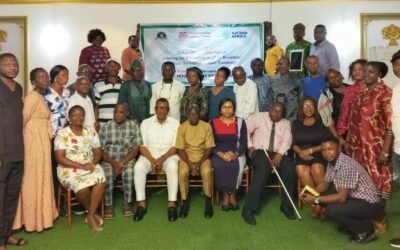
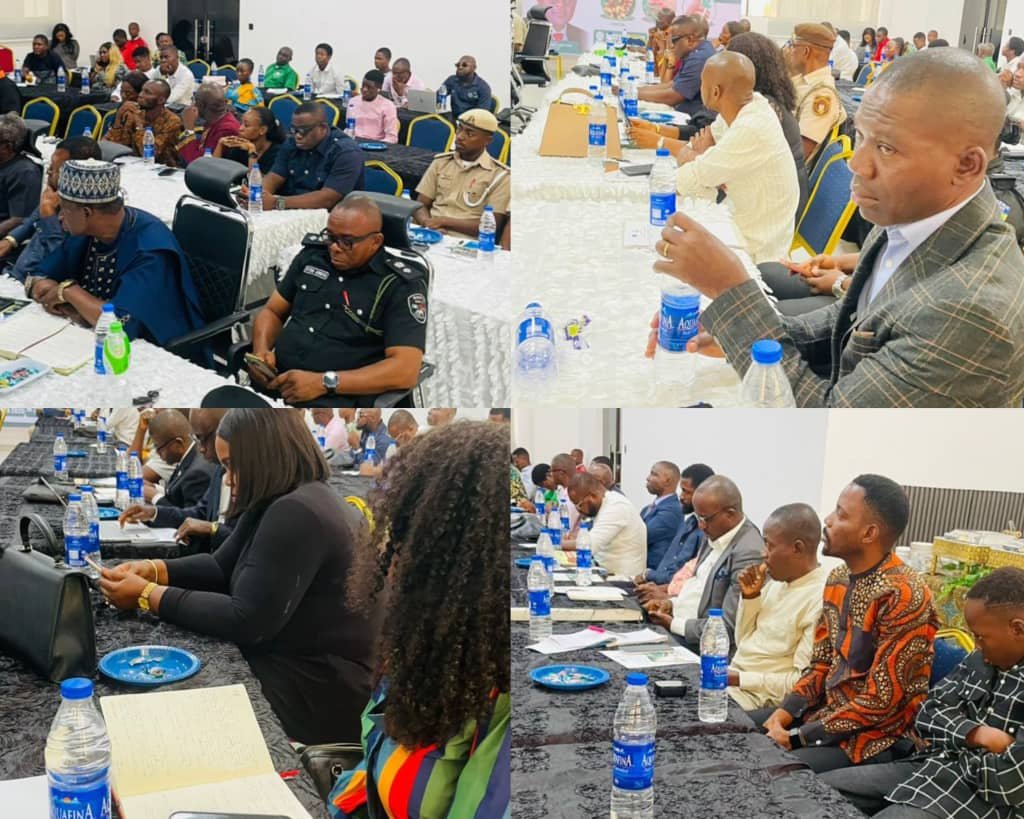
The initiative, a government-enabled but private-sector-led model, held a high-level sensitization workshop on Monday, December 22, 2025, at the State Library in Calabar. The session brought together government officials, private investors, financial institutions, and farmer organizations to align on a roadmap designed to stimulate rural employment and enhance national food security.
Addressing participants, the State Project Coordinator, Rev. Victor Edet, revealed that the SAPZ initiative in Cross River is backed by a $37.3 million USD investment. He noted that the state has already nurtured approximately two million cocoa seedlings to support farmers, ensuring the state is ready for a massive production spike.
“There are opportunities coming to Cross River State that we need to be ready and prepare to exploit,” Edet stated, emphasizing that the agricultural roadmap is strategically aligned with the development of the Bakassi Deep Sea Port to facilitate seamless exports.
“The project architecture consists of two primary physical anchors; the Agro-Industrial Hub (AIH) located on 133 hectares in Adiabo, featuring “mini-EPZ” with a state-of-the-art processing infrastructure, including power facilities, water treatment, and quality assurance laboratories.
“The Agricultural Transformation Center (ATC), situated on 37.8 hectares in Okuku, Yala, focusing on primary processing, aggregation, and mechanization services to reduce post-harvest losses,” he explained.
Project Evaluation Officer, Felix Eke, clarified that while the project receives funding from the African Development Bank (AfDB), Islamic Development Bank, and IFAD, the ultimate goal is sustainability through private investment.
“The special agro-industrial processing zones project is government-enabled for the private sector,” Eke explained. “We pay premium to private sector stakeholders to involve them in whatever we’re doing. The enabling environment must be put in place for the project to outlast our funding.”
Linda Cobham, the program’s Communications Officer, stressed that SAPZ is an “ecosystem” rather than a standalone project, emphasizing the interdependence of all stakeholders.
“Stakeholders are co-implementers and not observers,” Cobham said. She outlined specific roles for various groups, urging regulatory agencies like NAFDAC and SON to fast-track certifications for SAPZ-grown products to make them export-ready. She also called on financial institutions to provide “tailored financing” that respects the biological timelines of crops like cocoa.
On his part, Dr. Bethel Ewung, the Agricultural Productivity Officer, said that the program aims to reduce post-harvest losses by at least 50% through the strategic placement of the ATC.
“Significant reduction in unemployment through new industrial and farming roles.
“Building the capacity of small and medium enterprises to drive the state’s economy.
“Reducing the national dependency on food imports by boosting local production.
“Promoting tech-driven agribusiness management and climate-smart technologies,” he said.
As the program moves into its active implementation phase, the State Project Implementation Unit (SPIU) will continue to engage with the Calabar and Ikom Chambers of Commerce to mobilize investors into the three priority value chains.
The message from the workshop was clear: with the infrastructure at Adiabo and Okuku nearing readiness, the ball is now in the court of the private sector to turn Cross River’s “green gold” into industrial wealth.