


Cross River State is emphasizing that its efforts to regain littoral status should not be interpreted as a claim on any territory belonging to Akwa Ibom State.
Mr. Nsa Gill, Special Adviser on Public Affairs to Governor Bassey Otu, addressed this point during a briefing, stating the need for clarification due to what he described as the politicization of the issue by some Akwa Ibom elders.
He stressed that the matter extends beyond previous Supreme Court judgments, which some argue preclude Cross River from benefiting from coastal resources.
READ ALSO: ‘A Decisive Moment’: Civil Society Groups Demand Urgent Review of Cross River Forestry Law
Mr. Gill highlighted the scientific basis for Cross River’s claim to littoral status, emphasizing the continued existence of Bakassi Local Government Area within the state and its access to the Gulf of Guinean, despite the ICJ ruling that ceded parts of the peninsula to Cameroon.
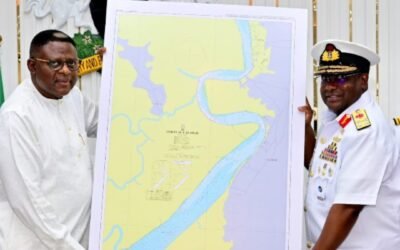
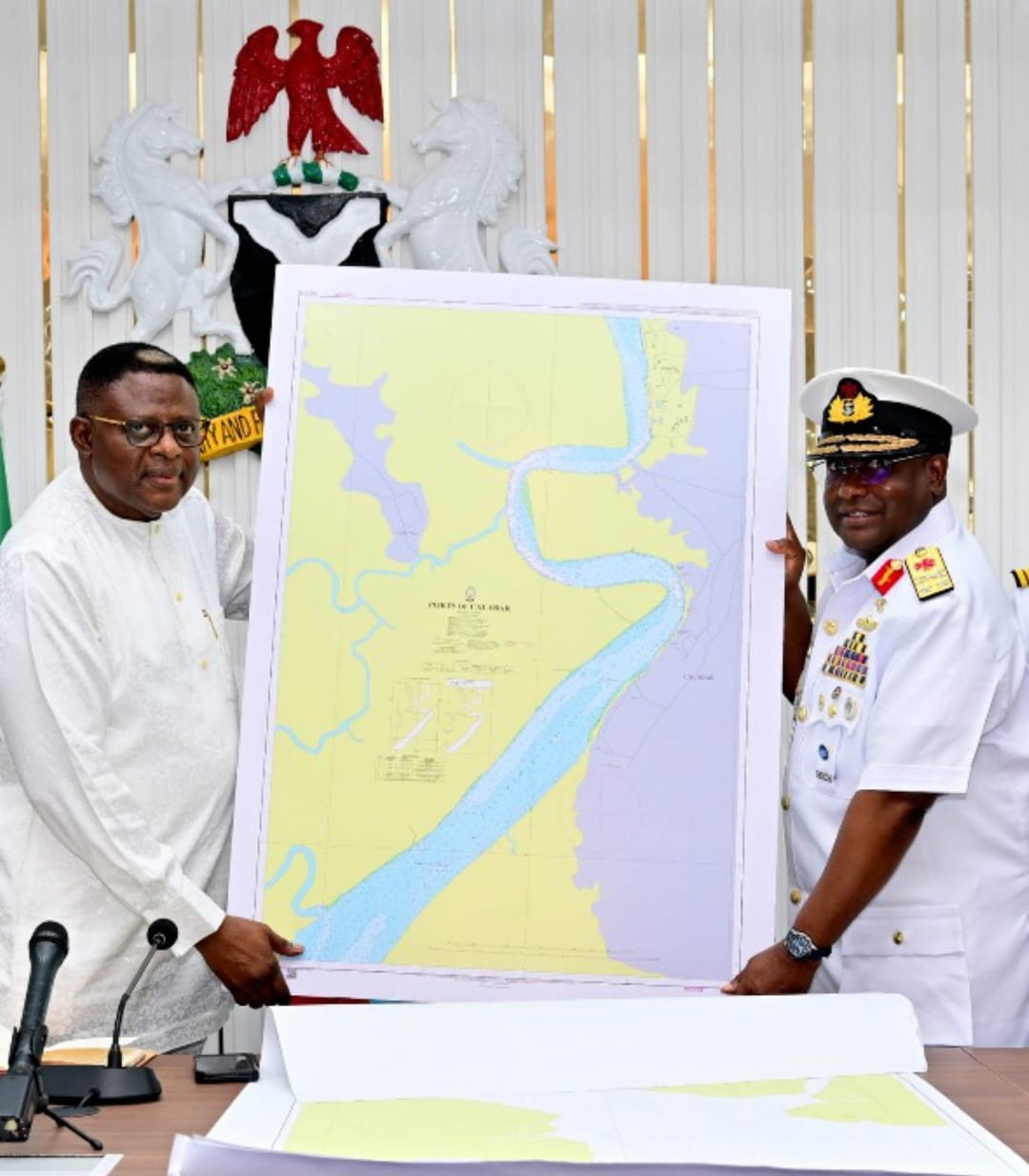
He explained that Governor Otu, after evaluating the Bakassi Deep Seaport project, has taken steps to ensure its realization. A key step was the approval for a hydrographic, geophysical, and geotechnical survey of the area, contracted to the National Hydrographic Agency (under the Nigerian Navy). This survey, conducted around Parrot and Tomshot Islands, provided crucial data on soil composition, water depth, and other parameters necessary for the port’s construction.
Mr. Gill emphasized the broader national significance of the survey, stating that its results have the potential to reshape the understanding of the Gulf of Guinea. The technical report was presented to the President, who subsequently approved funding for the Bakassi Deep Seaport project from Afrexim Bank, with construction managed by Arise Integrated Industrial Platforms. The survey provided Nigeria with an updated nautical chart, recognized in the World Hydrographic Chart, generating revenue from ships using the area. Furthermore, it reinforces the strategic importance of the Cross River Estuary for navigation, maritime security, and continental shelf entitlement.
Following the presentation of scientific data, the President authorized an Inter-agency Technical Committee for field verification. This committee included representatives from Akwa Ibom State, led by their Surveyor General, as well as the Cross River State and Federal Surveyors General, and other federal agencies. The team conducted a technical verification, plotting 239 crude oil and gas wellheads using current scientific base maps. This process goes beyond the 76 oil wells controversially awarded to Akwa Ibom State in 2012, following a Supreme Court judgment, which Cross River argues was implemented administratively without a proper survey by the National Boundary Commission and the Revenue Mobilization, Allocation, and Fiscal Commission.
Mr. Gill reiterated that Cross River’s claims are based on verifiable facts, not propaganda. He stated that Governor Otu is committed to recovering the state’s lost littoral status and the associated financial earnings that were allocated to Akwa Ibom after the 2012 Supreme Court judgment. He expressed hope that, in time, Akwa Ibom residents will also benefit from the resulting prosperity and development.
He concluded by underscoring the national maritime security implications of the Cross River Estuary and its offshore boundaries.
It is also note worthy knowing that the ICJ judgment of 2002 did not cede all parts of the Bakassi Peninsula to Cameroon and Cross River Estuary still exist and Nigeria never ceded oil wells to Cameroon. If Nigeria did not cede any oil well to Cameroon, why is Cross River denied what was known to be theirs?