








By Kelvin Obambon
A group of civil society organizations (CSOs) has issued a clarion call to the Cross River State Government, warning that the state’s iconic forests – the largest and most biodiverse in Nigeria – face total collapse unless the state’s 16-year-old forestry laws are immediately modernized.
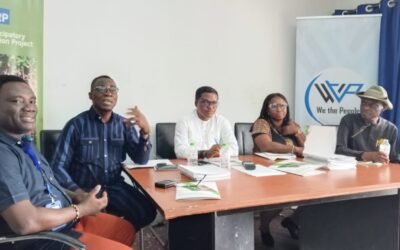
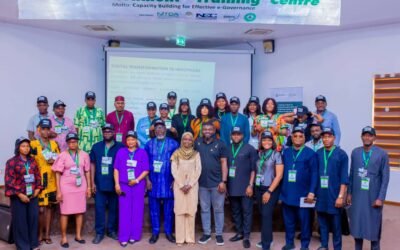
The coalition, comprising We The People (WTP), PADIC Africa, Uyo Iban, NGO Coalition for Environment, the Nelson Ofem Initiative, Onyx Foundation Africa, Policy Alert, the Nigerian Conservation Foundation, Biodiversity Rescue Club, among others, made this demand during a media briefing in Calabar on Wednesday 25 February, 2026.
The group formally presented a landmark report titled “Recommended Reviews of the Cross River State Forestry Law, 2010: The Imperatives of an Amended Cross River State Forestry Law.”
An Ecological Crisis in Numbers
The report paints a grim picture of environmental degradation in a state once celebrated as Nigeria’s “Green Heart.” According to the coalition, Cross River has already lost over 60 percent of its original forest cover. What were once dense, carbon-rich tropical rainforests are rapidly transitioning into degraded lands and grasslands.
“Thousands of logs are extracted daily – both legally and illegally,” the coalition stated. “The situation is not simply environmental. It is economic. It is social. It is generational. If urgent reforms are not undertaken, we risk losing one of Nigeria’s most valuable ecological assets permanently.”
Outdated Laws vs. Modern Crimes
The crux of the report centered on the inadequacy of the Forestry Law of 2010. While the law was a step forward at its inception, the coalition argued it is now woefully obsolete in the face of organized forest crimes and the global climate crisis.
A glaring example of the law’s failure is the current penalty system. Under the 2010 framework, if a truck is seized while committing a forest crime, the penalty is a mere N200,000. The coalition described this as an “incentive” rather than a deterrent, noting that illegal loggers consider such small fines a negligible cost of doing business.
Five Pillars for Reform
The 60-page policy brief, which resulted from six months of technical consultations with legal experts, academics, and forest-dependent communities, outlines five critical areas for legislative action:
Climate Alignment: Repositioning forests as climate assets to tap into the global carbon financing market, which was valued at $1.46 trillion in 2022.
Stiff Deterrence: Implementing proportionate sanctions and improved monitoring to dismantle organized logging and wildlife trafficking syndicates.
Governance Overhaul: Clarifying institutional mandates to eliminate ambiguity and ensuring transparency in licensing.
Ecotourism Pathways: Embedding conservation-based enterprise into the law to create jobs and protect the state’s landscapes.
Community Sovereignty: Moving away from treating indigenous communities as “passive recipients” and instead making them active co-managers with legal rights to benefit-sharing.
A Call to Action
The briefing was led by prominent environmental advocates, including Mr. Ken Henshaw (WTP), Dr. Odigha Odigha (NGO Coalition for Environment), Dr. Martins Egot (PADIC Africa), Okoho Ene (Uyo Iban), and Hon. Nelson Ofem (Nelson Ofem Initiative).
“Reforming the Forestry Law is not merely about protecting trees,” the leaders concluded. “It is about protecting climate stability and the economic future of Cross River State. We cannot afford incremental reform; we require comprehensive modernization.”
The coalition is now looking toward the Cross River State House of Assembly for legislative action, signaling that this report is just the beginning of a sustained advocacy campaign to save Nigeria’s remaining forests.