




By Our Reporter
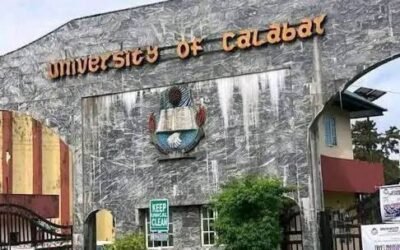
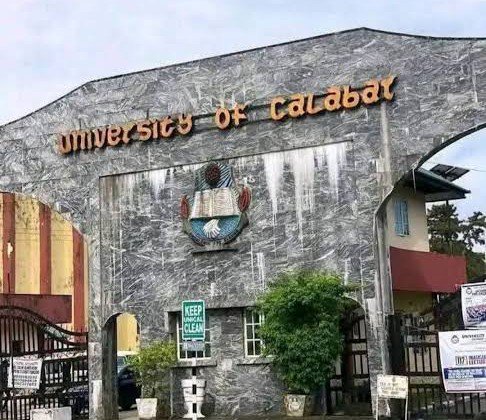
A five-year legal battle between the University of Calabar (UNICAL) and eight of its students has concluded with a scathing judgment from the Federal High Court sitting in Calabar. The court declared the institution’s actions in admitting students into unaccredited engineering programs as “fraudulent, reckless, and deceitful.”
Presiding Judge, Justice R. O. Dugbo-Oghoghorie, delivered the judgment on Wednesday, March 4, in the suit (FHC/CA/CS/117/21) filed by Idiong Ekpedeme Godwin and seven others—popularly known as the “UNICAL 8″—against the University, its former Vice Chancellor, Prof. Florence Obi, and four others.
The plaintiffs dragged the institution to court in 2021 after discovering that the Engineering programs they were admitted to study were not accredited by the National Universities Commission (NUC) or the Council for the Regulation of Engineering in Nigeria (COREN).
The students alleged that they were led to believe the programs were fully functional through faculty handbooks and public representations. However, after reaching their 300 and 400 levels, having paid fees and passed exams, they were informed by the NUC during a resource verification exercise that they had to “step down” to 200 level because the programs were not authorized. Some departments were eventually scrapped entirely, leaving students with no path to graduation.
In her judgment, Justice Dugbo-Oghoghorie dismissed the University’s defense that the students were “ignorant” of the accreditation process. The University had argued that accreditation is a multi-step process and that students joined the faculty of their own volition.
The Judge disagreed, stating, “The sixth defendant [UNICAL] recklessly and without regard allowed innocent students… to fall victim to their acts. The court cannot decide in favour of the defendants; what transpired was done in bad faith.”
No institution should operate a program without prior NUC approval. The University owed a “duty of care” to disclose the accreditation status to prospective students.
Evidence showed full accreditation was only secured in the 2024/2025 cycle – years after the plaintiffs were expected to have graduated.
The court awarded N50 million in general damages and N5.247 million in special damages to the plaintiffs for the psychological trauma and academic stagnation they suffered.
However, the court declined the prayer to stop the operation of the Faculty of Engineering, noting that recent evidence shows the programs have now finally secured accreditation. The request to absorb students back into their original departments was also ruled as “overtaken by events” due to the passage of time and the scrapping of certain departments.
Speaking after the judgment, counsel to the plaintiffs, Barr. Ozinko Ozinko, hailed the courage of the students. “It is not easy to fight the status quo… Justice may be slow, but it has finally reached its destination,” he said. He noted that while the money provides some relief, it cannot fully replace the years lost by students whose departments were totally scrapped.
One of the plaintiffs, Ekpedeme Godwin, a self-sponsored student, expressed relief: “We suffered a lot of challenges… the authorities told us they had the power to shut down the faculty and everyone go home. I was not satisfied, so I sought justice.”
Counsel to the University, Barr. Jonas Abuo, thanked the court for the judgment but declined further comments to the press.