


By Ovat Abeng
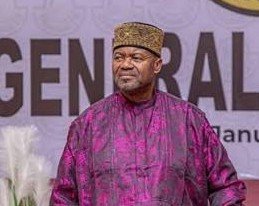
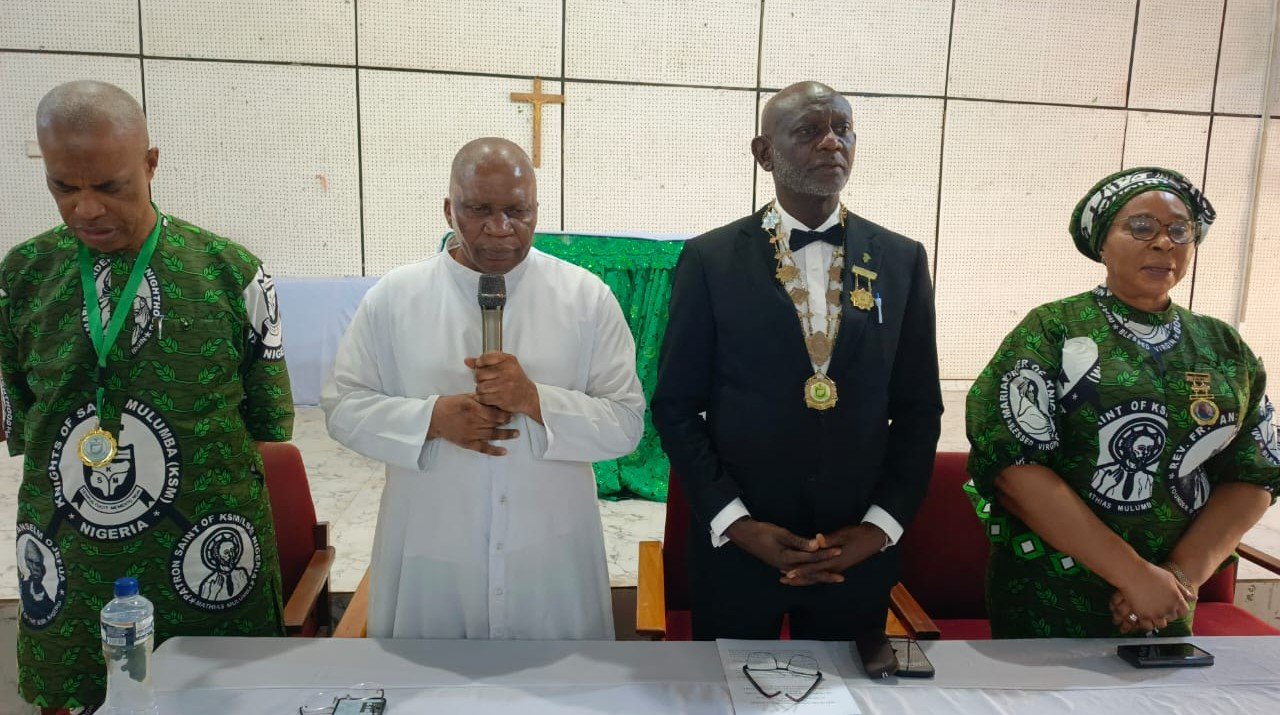
The newly appointed Supreme head of the Knights of Saint Mulumba (KSM) Nigeria, Sir Steve Zakari Adehi (SAN), has expressed worried over the persistent abductions and killings of Nigerians, particularly in the Northern part of the country by men of the under-world amidst global intervention.
Adehi express the organisation”s dissatisfaction during his maiden media briefing held at the KSM headquarters in Onitsha, on Sunday.
He lamented that kidnapping and killing has become a norm in all the Northern part of Nigeria.
For instance, some months ago, in a modest parish on the outskirts of a major Nigerian city, a Knight was visiting a family whose breadwinner had been abducted on his way home from work. No ransom demand had come.
READ ALSO: Orok Duke Congratulates Governor Otu on MAU Honorary Doctorate
No clear trail existed. The wife had stopped asking when her husband would return; she had begun asking how to keep her children in school.
The parish had rallied. The council had stepped in quietly. Food came first. Then school fees. Then legal assistance when rumours emerged that the man might be in unlawful detention rather than in the forest.
Nothing about that intervention made the news.Yet for that family, Nigeria did not completely abandon them.I start there because it captures both the tragedy and the possibility of the moment we are living in.
“Nigeria is tired not just economically strained or politically frustrated but morally exhausted.
Many citizens now live with a constant background anxiety: about safety, about fairness, about whether effort still leads anywhere.
The most corrosive damage is not always visible. It is the gradual lowering of expectations. The quiet sentence many Nigerians no longer say out loud: “This is how things are.”When societies reach this point, the danger is not protest; it is resignation on the part of our leaders.
Institutions that care about the future must recognise this shift. Not with panic, but with seriousness.For many years, the Order of the Knights of Saint Mulumba Nigeria worked largely in silence which they do more by conviction, not by avoidance.
We believed that service, to remain pure, must remain modest. That belief still holds. But today, silence alone is no longer neutral. In an environment saturated with noise, absence from the moral conversation can be mistaken for irrelevance.That is why we are here.WHO WE ARE IN PRACTICE, NOT IN DESCRIPTION.
The KSM is not an advocacy Non-Governmental Organisation NGO, and we are not a political pressure group. But neither are we ornamental.
With over three hundred Councils across Nigeria, our members are not observers of national dysfunction; they are entangled in it as civil servants, professionals, entrepreneurs, judges, teachers, healthcare workers, and parish leaders.
This gives the Order a particular vantage point:we encounter Nigeria where policy meets pain.Over the years, this has shaped our work in ways that are neither theoretical nor episodic.In many dioceses.
Knights have become consistent partners to schools struggling to survive economic pressure supporting infrastructure, subsidising fees for indigent students, and mentoring young people who might otherwise drift into despair or delinquency. In some regions, councils have adopted entire classrooms, ensuring that children displaced by violence or poverty do not lose years of learning to circumstances beyond their control.
In healthcare, KSM councils have funded medical outreaches in rural and semi-urban communities covering surgeries, maternal care, and chronic illness management for families who would otherwise simply endure sickness as fate. These are not symbolic gestures; they are sustained interventions, often repeated year after year where dignity is most vulnerable.
For years, the Order has maintained an active presence in prisons across the country. Knights visit regularly not only to evangelize, but to listen.
“Many have sat across from men who have been incarcerated longer than the maximum sentence for the crimes they were accused of. Awaiting trial has become, for some, a life sentence in slow motion.
In response, KSM councils have provided legal support, facilitated dialogue with justice sector stakeholders, and in some cases helped secure the release of inmates unjustly held.
Beyond advocacy, the Order has supplied food, clothing, medical support, and reintegration assistance for released prisoners because freedom without reintegration is another form of punishment.These efforts do not romanticise crime. They exist on proportionality, humanity, and due process principles without which justice becomes cruelty by another name, Vulnerability, seen and unseen.
The Order’s engagement with the vulnerable extends far beyond prisons.
Across several states, KSM councils are deeply involved in feeding programmes for the poor and indigent—elderly people without support systems, widows, families displaced by conflict, and residents of internally displaced persons camps.
In these camps, Knights have provided not only food and clothing, but educational materials for children and trauma-sensitive support for families navigating life after violence.
In one IDP camp, a Knight recounted meeting a young boy who could recite multiplication tables fluently but had not held a textbook in over two years. The council responded by setting up a modest learning center. Today, several of those children are back in formal schooling.These are small acts in the face of national scale problems.
Kaduna has become symbolic of the convergence of insecurity, identity tension, and state fragility.
Nigeria does not lack laws. It lacks enough men and women who can withstand pressure when the moment to compromise arrives quietly, without witnesses.
Nigeria’s most painful spaces are not always chaotic; often, they are simply forgotten. Correctional facilities, internally displaced persons camps, neglected communities these are places where life continues without witnesses. For years, the Order has been present in prisons through evangelism, welfare support, and advocacy for inmates held for unconscionable periods without trial.
Going forward, we are expanding this work beyond compassion to interrogation. We are committing to a nationwide, structured examination of the conditions that funnel citizens into incarceration in the first-place poverty, procedural injustice, youth criminalization, delayed trials, and the quiet tagging of survival.
Our conviction is clear: a society that only builds prisons without repairing pathways into dignity will continue to recycle human beings through suffering.
Correctional facilities must correct, not harden. Incarceration must become rarer, not routine.
The Order is deepening its engagement in justice access supporting indigent litigants, facilitating legal navigation, and advocating for alternatives where adversarial processes only compound harm. We are particularly concerned with restoring trust in the justice ecosystem by ensuring that outcomes are not only lawful, but intelligible, timely, and humane.
The order is strengthening mentorship and values-based formation across parish schools, tertiary institutions, and informal learning spaces.
Knights are committing time, not just resources walking with young people through questions of purpose, discipline, and civic responsibility.
Our aim is not to produce compliant citizens, but anchored adults young Nigerians who can endure frustration without turning to despair, violence, or predation.
The Order of the Knights of Saint Mulumba Nigeria is choosing as it intends to stay present, grounded, and accountable as one of those institutions that refuse to surrender the moral imagination of this country.
Adehi appealed to other religion organisations to support KSM change advocacy for a better Nigeria.