





By Cletus Asuquo
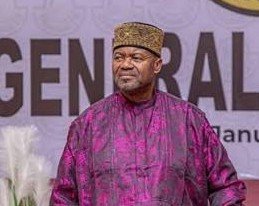
A Cross River-based cleric, Archbishop Josef Bassey, has faulted claims by the expelled Chairman of the All Progressives Congress in the state, Alphonsus Eba, that he played a decisive role in the emergence of Governor Bassey Otu, insisting that such assertions amount to historical distortion and disrespect to the people of the state.
Bassey who is the spiritual leader of God’s Heritage Nation and visionary of the Crossroads Christian Leaders Forum, said no individual or political structure could legitimately lay claim to producing a governor, adding that Eba owed the people of Cross River State a public apology.
The cleric spoke yesterday during an end-of-year media interaction in Calabar, where he addressed governance, politics and recent controversies surrounding comments credited to the former APC chairman.
READ ALSO: Terrorists relocate after US air strikes in Northern Nigeria
“For any individual to say that he made the governor of Cross River State is arrogance taken too far,” Bassey said.
“It is an insult to heaven, an insult to the Church, and an insult to the good people of Cross River State. No individual made Governor Otu.”
He stressed that the emergence of a governor was the outcome of collective action by the electorate, rather than the achievement of a single political actor.
“At the level where a man becomes governor, it is the people that make that happen. Every voter, every stakeholder, every Cross Riverian who played any role in that process is part of that decision,” he added.
Bassey further challenged the narrative that Governor Otu was a product of the APC leadership under the immediate past administration, insisting that the governor was not the party’s preferred choice at the time.
“Let it be clearly stated for the record that Prince Bassey Otu was not the choice of the Ayade-led APC for the governorship of the state,” he said.
“He was not the candidate they wanted.”
The cleric said Governor Otu’s emergence went beyond party politics, describing it as a response to “specific demands” that transcended political calculations.
“He is a politician, yes, but his emergence was not the product of political manoeuvrings. That decision was taken far above party strategies, individual claims and human orchestration,” Bassey said.
Addressing claims that former Governor Ben Ayade handed over power to the Southern Senatorial District, the cleric rejected the narrative, insisting that the South earned the governorship through political sacrifice.
According to him, Ayade would likely have been a one-term governor but for the intervention of leaders and stakeholders from the Southern Senatorial District who supported his re-election to preserve zoning balance.
“Ayade did not hand over power to the South. The South took it,” Bassey said.
“In fact, Ayade owes the South a thank you for not allowing him to become a one-term governor.”
He explained that Southern political leaders agreed to support Ayade’s second term with the understanding that power would rotate back to the district afterward.
Bassey also commended Governor Otu’s administration, particularly for what he described as inclusive governance, noting that the Northern Senatorial District had benefited significantly within the first two years of the administration.
“In two years, Governor Otu has done more for the North than what some past governments did in eight years,” he said.
He cited remarks credited to leaders from the district, including Dr Julius Okutu, who reportedly noted that infrastructural development in the North had improved more under Southern leadership.
The cleric urged politicians to avoid actions capable of overheating the polity, especially at the end of the year, describing the period as one for reflection rather than political tension.
“This is a time for sober reflection and stock-taking, not for inciting one group against another or trying to overturn history,” he said.
He called on political actors to place the collective interest of the state above personal ambition, warning that distorted narratives could undermine unity and progress.